DN80 Dewatering Pipeline Nozzle Repairs
.jpeg)
Case History
DN80 DEWATERING PIPELINE
NOZZLE REPAIRS
NOZZLE REPAIRS
BioWrap 102 engineered composite repair
Customer/site: Confidential
.jpeg)
DN80 DEWATERING PIPELINE NOZZLE REPAIRS
BioWrap 102 engineered composite repairs to legacy plugged nozzle locations
4
nozzle repair areas
DN80
dewatering pipeline
6
layers per repair area
5 years
design life
Project overview
Asset and service conditions
- Location: Confidential - UK cement / minerals processing site
- Asset: DN80 dewatering pipeline nozzle locations
- Service: water / dewatering duty
- Substrates: carbon steel and stainless-steel repair locations
- Geometry: four legacy plugged nozzle connections
- Design / operating temperature: 0-50°C / 10-40°C
Customer requirement
- Reinforce legacy plugged nozzle areas after previous wrap material was removed.
- Restore local external profile around small-bore nozzle / plug geometry.
- Provide a cold-work composite repair route using BioWrap 102.
- Retain completion evidence, repair records and photographs for traceability.
Challenge
- Legacy plugged nozzles and existing wrap material created irregular geometry requiring controlled profiling and reinforcement.
- Corroded plugs and adjacent threaded connections required reinforcement without hot-work or replacement fabrication.
- Mixed-material details and small-bore nozzle geometry required controlled preparation, profiling and laminate termination.
- The repair needed to be specific, documented and traceable, not a generic wrap over a difficult detail.
Before condition
Legacy plugged nozzles, previous wrap material and local corrosion
Before condition: legacy plugged nozzles and exposed local detail
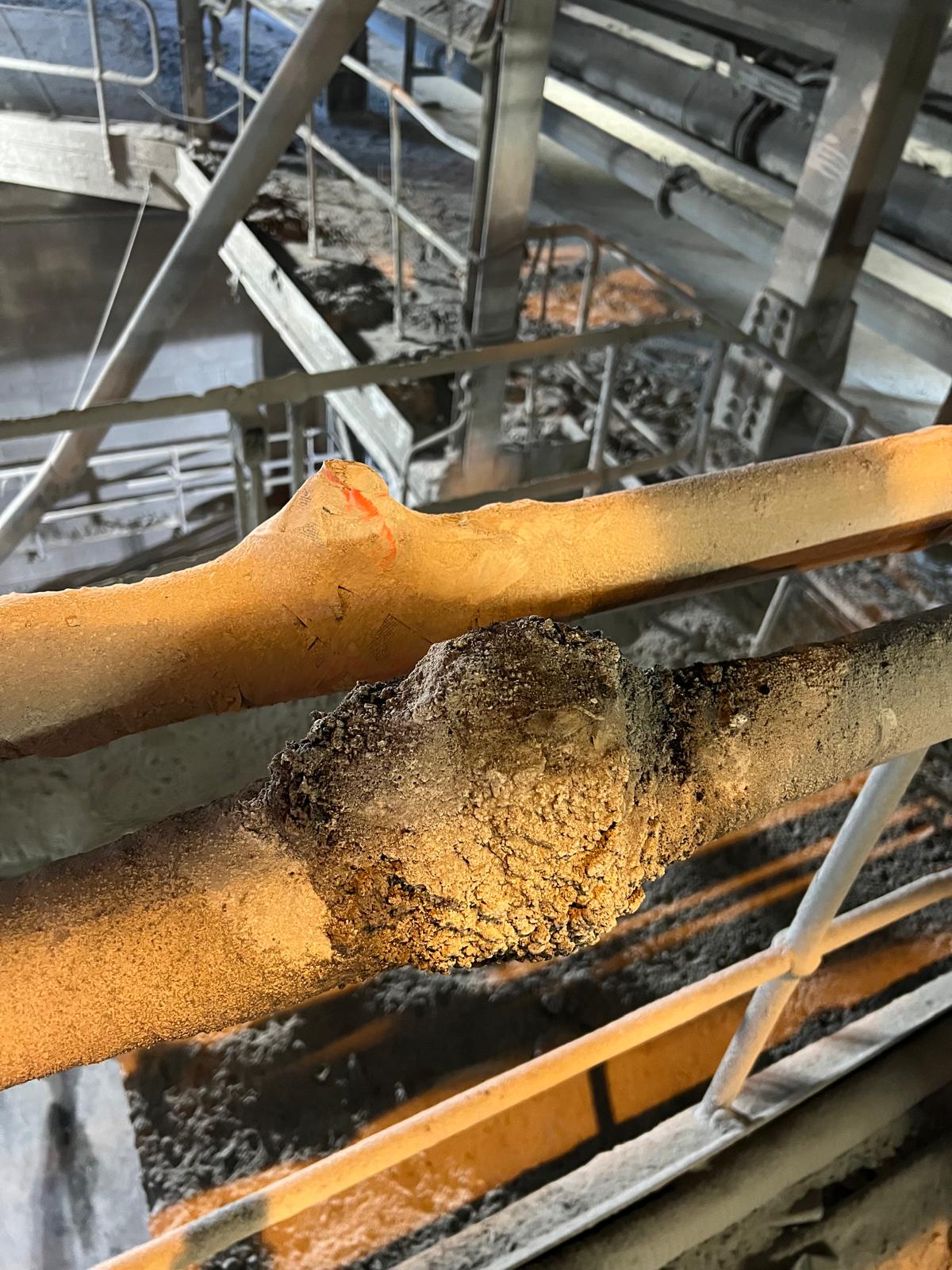
Existing wrap build-up and local nozzle profile before remedial work.
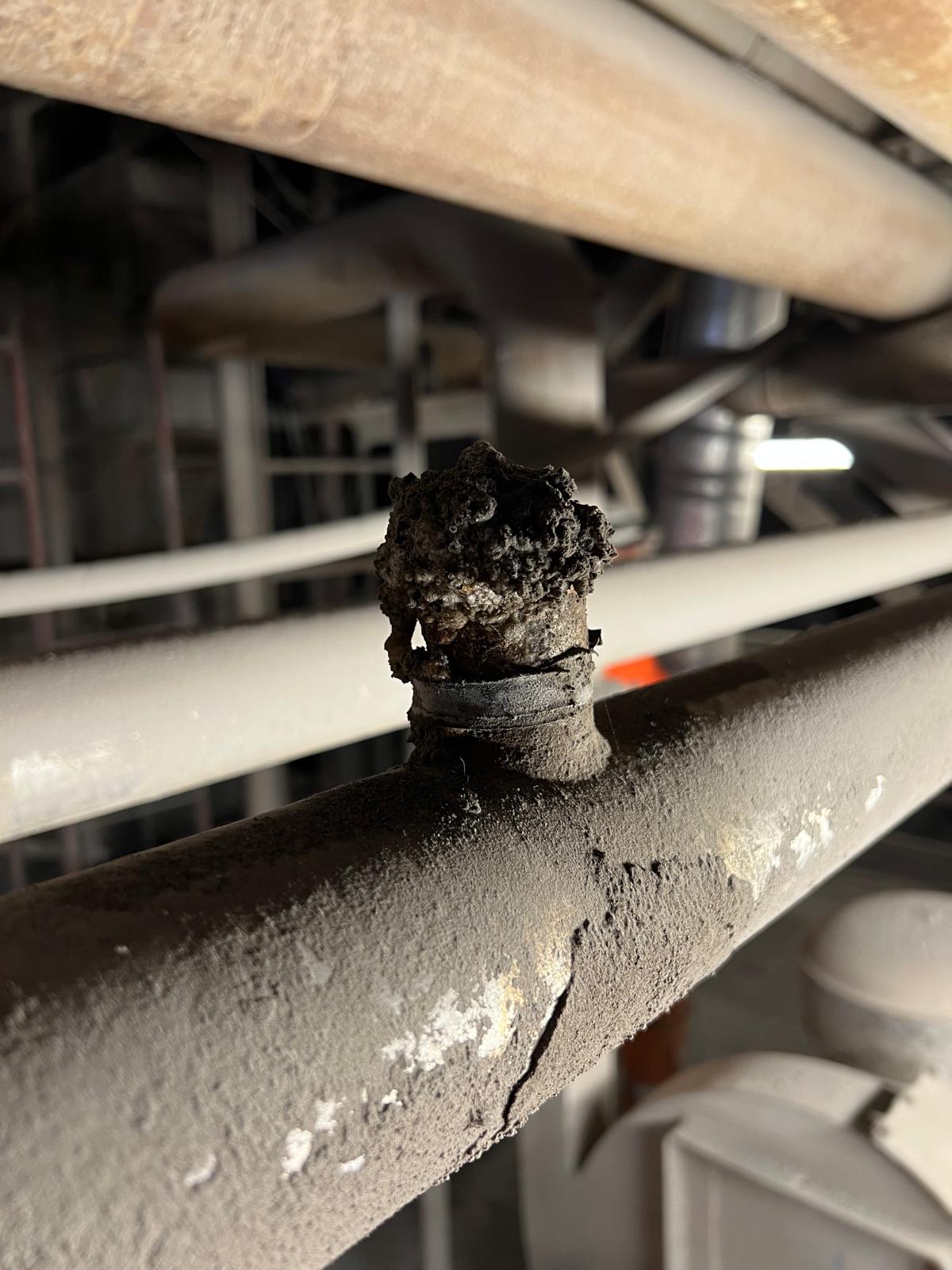
Corroded legacy plug / nozzle condition exposed before repair activity.
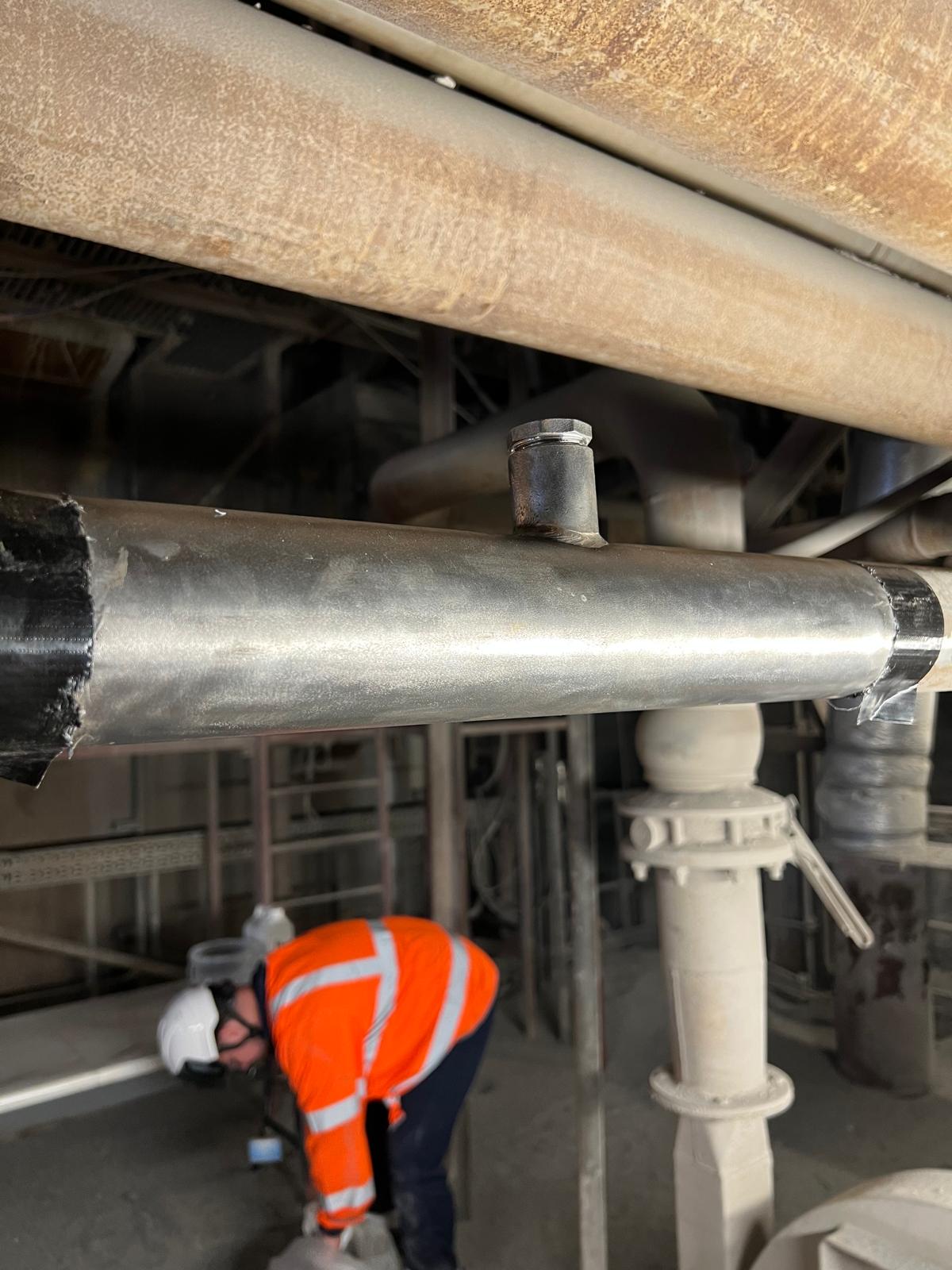
Exposed nozzle geometry after defective material removal and surface preparation.
Engineered repair method
01
Review and design
Repair scope defined from site inputs and issued repair specification.
02
Surface preparation
Defective legacy material removed and substrate prepared.
03
Profiling
Geometry restored around nozzles and transitions.
04
Composite application
BioWrap 102 applied to the specified layer count and extent.
05
Cure and sign-off
Cure period completed, inspected and recorded in completion evidence.
Repair data and technical controls
| Composite system | Repair areas | Layers applied | Design life |
|---|---|---|---|
| BioWrap 102 | 4 nozzle repair areas | 6 layers per repair area | 5 years |
Why this was a specialist repair
- Small-bore nozzle details create stiffness and profile transitions requiring controlled filler and laminate design.
- The repair relied on defined surface preparation, profiling, cure control and completion records, not visual coverage alone.
Source evidence used
- Repair specification and controlled job documentation.
- Completion certificate, installation records and job photographs.
- Quote / PO and job-folder evidence for scope and delivery dates.
Completed repairs
Repair execution and completed BioWrap 102 nozzle repairs
Repair execution and completed BioWrap 102 repairs
Prepared nozzle connection ready for profiling and composite application.
.jpeg)
Completed single-nozzle engineered composite repair.
Completed paired-nozzle repairs on DN80 dewatering lines.
Outcome
What was achieved
- Four engineered composite repairs were completed and recorded for the DN80 dewatering pipeline.
- Repair areas were prepared, profiled, laminated and allowed to cure under controlled job conditions.
- The reinstated repair surfaces provide visible external protection and structural reinforcement to the repaired nozzle locations.
- Completion evidence and photographic records were retained in the job folder.
What this demonstrates
- Practical composite repair of small-bore nozzle geometry on industrial pipework.
- Controlled preparation, profiling, BioWrap 102 laminate build-up and QA records.
- Use of BioWrap 102 where local geometry makes a generic wrap unsuitable.
Need an engineered repair assessment?
Send the minimum engineering inputs and Icarus Composites can confirm feasibility, repair approach and the next technical steps.
01
Defect photos
02
Dimensions
03
Pressure / temperature / service
04
Required design life



