Our water pipeline repair solutions deliver fast, engineered repairs that restore structural integrity, seal active leaks, and extend the service life of critical water assets. Using advanced composite wrap systems, we help water authorities and operators reduce downtime, minimise disruption, and avoid costly pipe replacement. The result is a durable, standards-compliant repair that keeps water networks operating safely and reliably for decades.


As active members of British Water, we are embedded within the UK’s leading water-sector community, working alongside utilities, regulators, and technology providers to promote best practice and innovation. Our membership demonstrates a commitment to quality, compliance, and long-term asset resilience aligned with the needs of the regulated water industry. For our clients, this means solutions that are informed by sector-wide insight, evolving standards, and real-world operational challenges.
.png)
Composite wraps enable structural reinforcement and leak sealing without cutting out pipe sections or taking water assets out of service, minimising customer disruption and operational downtime.

Engineered composite systems arrest external and internal corrosion, restore load-bearing capacity, and provide durable protection in aggressive soil, splash-zone, and atmospheric environments.

Even when excavation is required, composite wraps typically avoid hot works, heavy lifting, and full spool replacement—reducing worksite complexity, reinstatement scope, and overall repair time.

Composite wraps restore pressure-containing capability and extend asset service life in accordance with ISO 24817 and ASME PCC-2, supporting regulatory compliance and long-term asset management strategies.
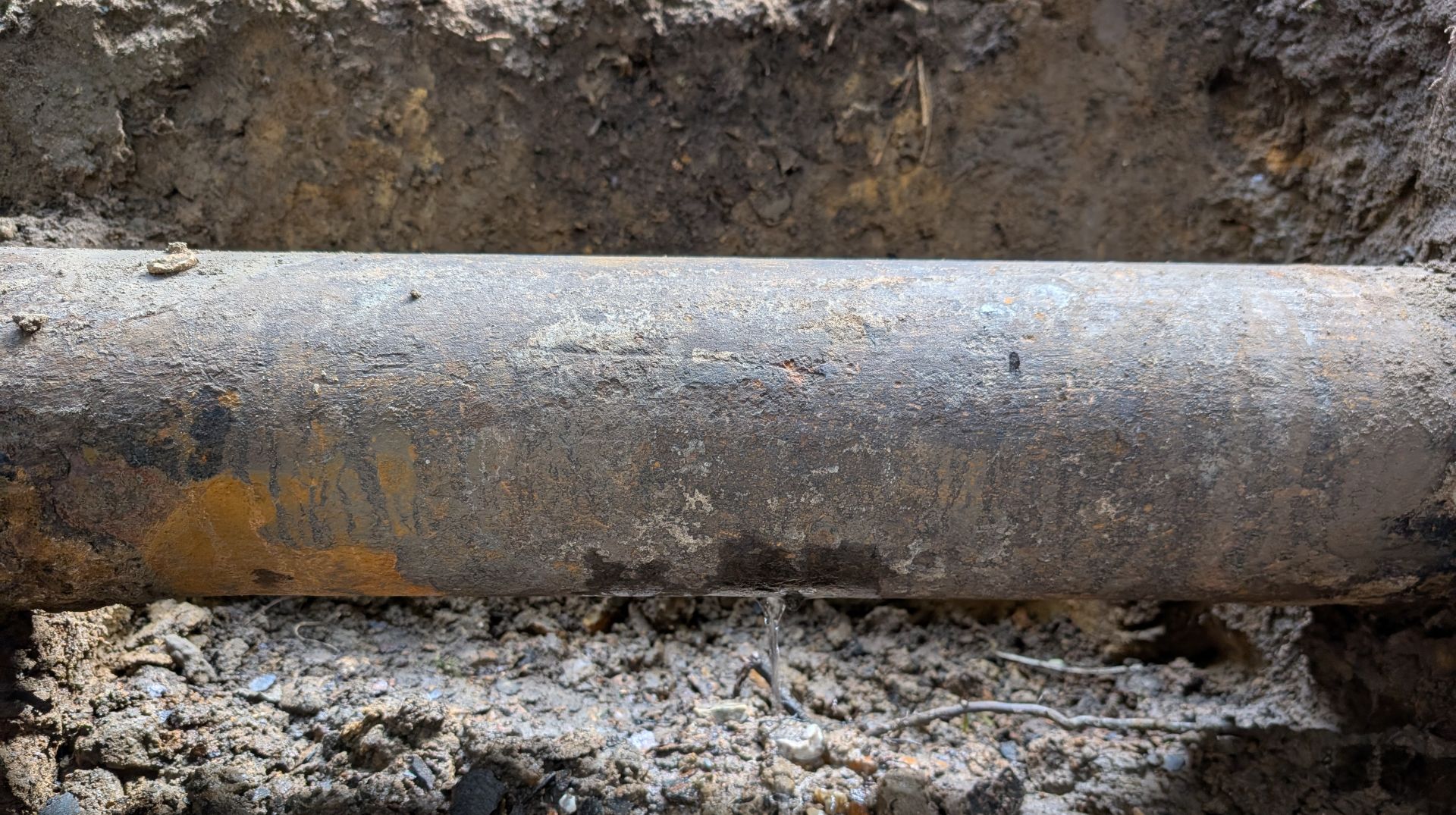
Composite wraps are engineered to restore the structural integrity of water pipelines that have suffered metal loss, wall thinning, or localised corrosion.


For leaking water pipelines, composite systems can be applied to seal the leak and structurally reinforce the pipe in a single operation. The repair bonds directly to the substrate, containing the defect and providing long-term load sharing, rather than relying on temporary containment. This allows operators to stabilise failures quickly, minimise water loss, and maintain network reliability—without hot works, welding, or extensive mechanical intervention on live assets.
Composite wraps form a continuous, bonded barrier that isolates the pipe surface from moisture, oxygen, and aggressive external environments. By sealing the affected area and preventing further exposure, corrosion propagation is arrested at the source. For buried and above-ground water pipelines, this delivers a durable, maintenance-free protection system that significantly slows asset degradation and supports long-term network resilience.


Every composite repair is designed as an engineered solution, with calculations and material selection aligned to ISO 24817 and ASME PCC-2. This ensures predictable performance, traceability, and compliance with industry best practice. For water authorities and framework contractors, the result is a repeatable repair methodology that stands up to audit scrutiny, supports asset management planning, and provides confidence that critical infrastructure is being repaired—not just patched.

Restores structural strength and pressure-retaining capacity, allowing degraded water mains to remain safely in service without full pipe replacement.
.png)
Seals leaks at the source while providing permanent reinforcement, reducing water loss and preventing repeat failures.

Strengthens high-stress connection points, improving reliability and reducing the risk of future leakage or joint failure.

Reinforces locally damaged pipe sections, preventing crack propagation and unplanned outages caused by external impact or ground movement.
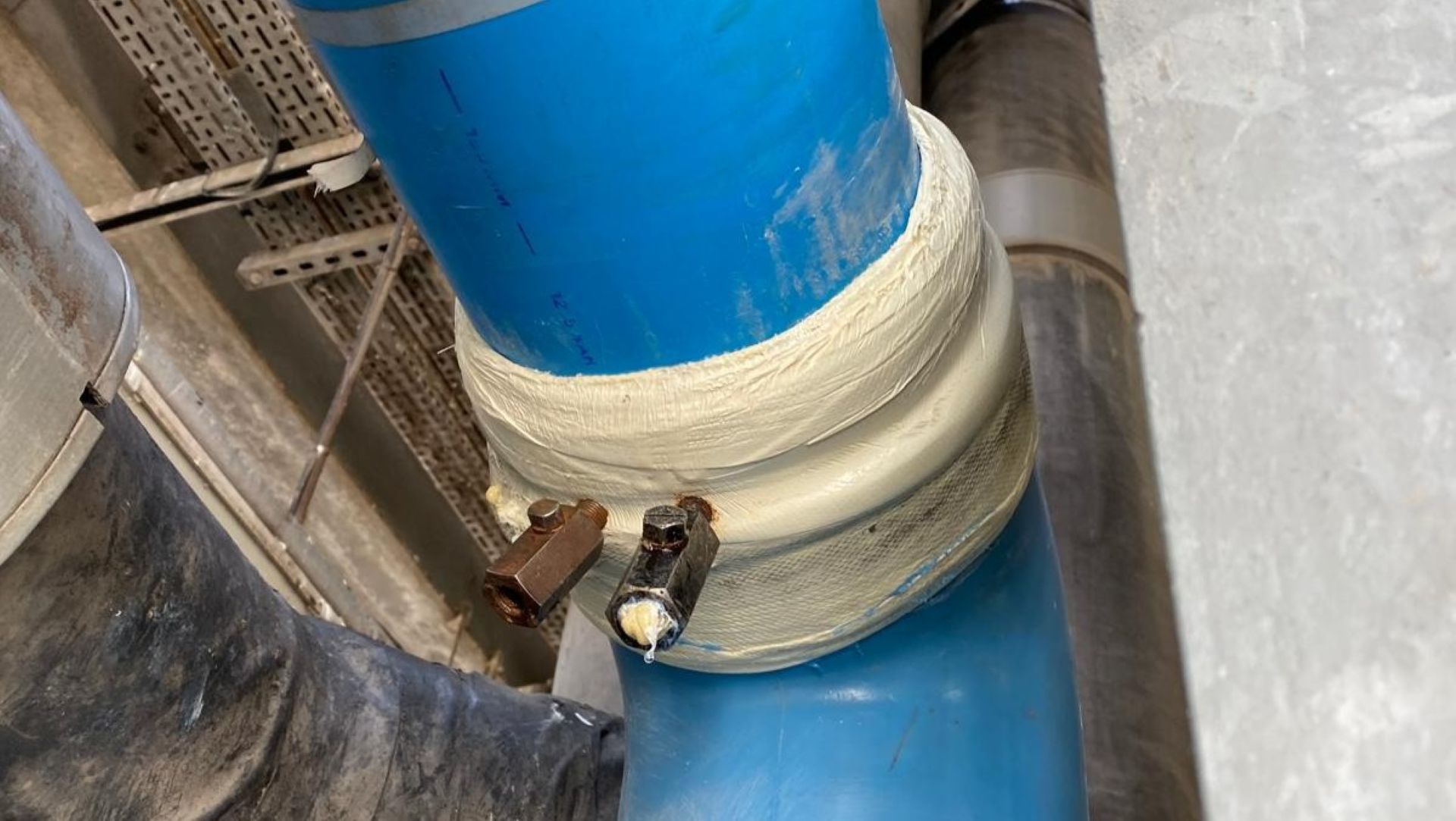
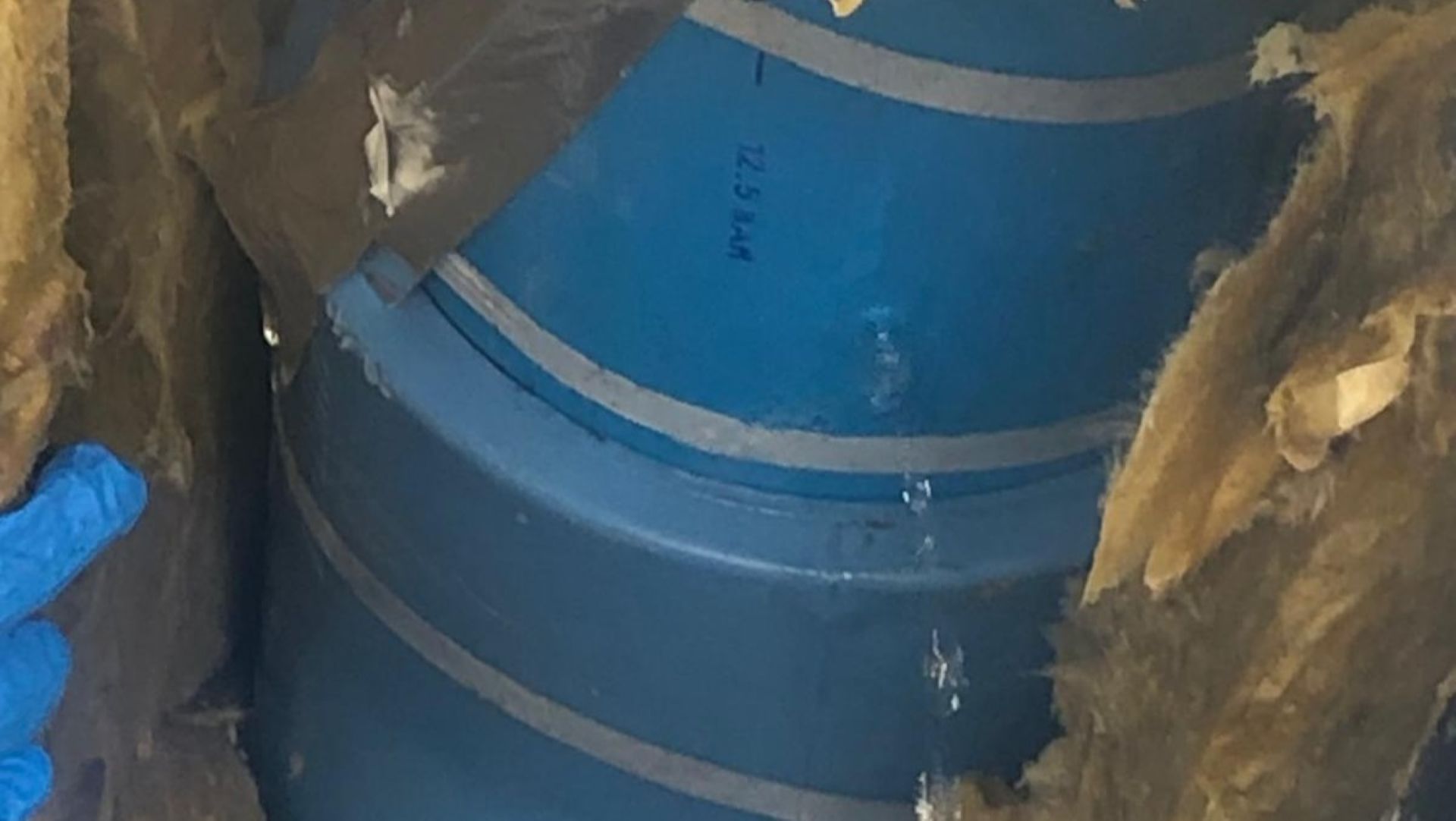
A leaking DN250 boosted cold-water elbow was successfully sealed and structurally restored while remaining live at 5 bar, using our online leak injejction method followed by a BioWrap 102 composite overwrap designed based on ISO 24817. The repair reinstated full pressure-retaining capability, prevented further water loss, and allowed the client to avoid immediate pipe replacement—delivering a guaranteed two-year design life under challenging confined conditions.

Every repair is engineered using internationally recognised composite repair standards, ensuring predictable structural performance and full pressure-retaining capability.
All composite repairs are installed using controlled procedures and verified through documented QA/QC checks, including surface preparation, laminate inspection, and cure validation.
Each repair is supported by calculations, method statements, and completion records, providing a clear audit trail for asset registers, regulatory review, and long-term asset management.
Ready to add engineered composite wraps and live leak sealing to your service portfolio? Tell us about your business and we'll get in touch.
Contact our team and we'll guide you step-by-step on the journey to getting your assets repaired.
Phone:
+44(0)1706 334178
Email:
contact@icarusgroup.co.uk
Website:
www.icaruscomposites.co.uk
Location:
Cambridge, United Kingdom
Q.
Are composite wrap repairs compliant with water industry standards?
A.
Yes—our composite repairs are engineered and installed in full accordance with ISO 24817 and ASME PCC-2, providing a recognised, auditable standard for pressure-retaining water assets.
Q.
Can composite wraps be used on live, pressurised water pipelines?
A.
Yes—composite systems can be applied to live water pipelines, including sealing active leaks, provided the repair is correctly engineered for the defect type and operating conditions.
Q.
Are composite repairs suitable for elbows, joints, and complex pipe geometries?
A.
Yes—composite wraps can be engineered for complex geometries such as elbows, tees, reducers, and nozzles using controlled fibre placement, profiling compounds, and tailored compression methods.
Q.
How long do composite repairs last on water pipelines?
A.
Depending on the defect mechanism and available corrosion data, composite repairs can be designed and warranted for service lives ranging from 2 to 20 years.
Q.
What surface preparation is required before applying a composite wrap?
A.
Composite repairs require surface preparation to Sa 2.5 (near-white metal) to ensure long-term adhesion and structural performance.
Q.
How is repair quality verified after installation?
A.
Each repair is supported by full QA/QC documentation and can be inspected using suitable NDT methods such as radiography, phased array ultrasonic testing, or dynamic response spectroscopy.